
Lindsay never waited for life to slow down before going after her goals.
She learned how to make space without making time.
Her story challenges what “too busy” really means.
🌟 Welcome to Interview with a Goal-Crusher! 🌟
Hi, I’m Coach Tony, and this is Interview with a Goal-Crusher.
Every month, I sit down with someone who’s crushing their goals and building a happier life in the process. These are real people, not gurus … just like you. Think of it as free mentoring … straight from people who’ve done the hard work and have the wins (and lessons) to prove it.
Are you ready for a dad joke?

I offer you this "dad joke" as a light "amuse-bouche" to entertain your mind before we get serious. My dad joke may be groan-worthy, but it's worth every penny you paid for it, right?

I took the shell off my racing snail because I thought it would make him faster.
Turns out it just made him sluggish.
A Very Full Life: How Lindsay Made Space Without Making Time
Have you ever wanted to pursue something new, only to talk yourself out of it because you were “too busy”?
One of the most common reasons people don’t go after big goals isn’t a lack of ability or desire. It’s the belief that there simply isn’t enough time. When a goal feels incompatible with a busy life, most people never give it a real shot. They quietly set it aside and let it die of loneliness.
Throughout February, Operation Melt is focused on breaking that pattern.
Across my blogs and this month’s Goal Crusher Coffee Chat, we’re unpacking what “too busy” really means and how to stop using it as a reason your goals never get their turn. Yes, February is the shortest month of the year. That just means we’ll be intentional with it.
We’re kicking off this month of “not too busy” with an Interview with a Goal-Crusher featuring Lindsay.
On paper, Lindsay had every reason to say, “I’m too busy.” She’s a mom, a wife, a volunteer, and a busy professional. That’s a full life by any measure.
But she didn’t let busyness be the end of the conversation.
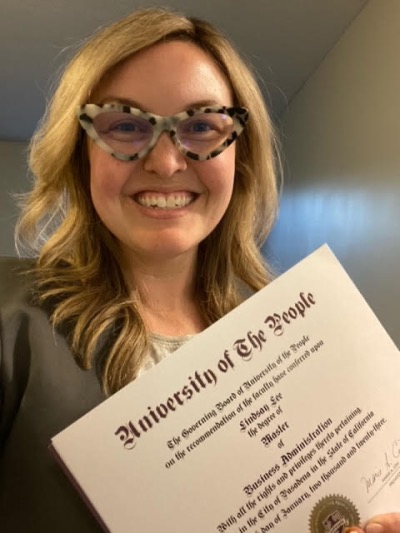
She earned her MBA.
She became a project manager.
She navigated multiple job changes along the way.
Lindsay is one of my favorite examples of what happens when “too busy” stops being a stopping point. Here’s her story.
Let’s start with the basics. Who are you, and what do you do?
My name is Lindsay Lee. I am a wife and a mom to two lovely boys.
By profession, I am an Operations Manager at a tech organization and am experienced in a variety of corporate retail functions (procurement, buying, allocation). I also serve on the Board of Directors at St. Stephen’s Community House.
I have lived in the greater Columbus area for over ten years, preceded by Austin, Brooklyn, and Indianapolis.

What motivated you to pursue your unique journey? What was your vision? Can you share your story?
The pandemic was the catalyst for making a change.
In 2020, I was furloughed from my job, along with a majority of corporate retail employees. Despite understanding the economics of why it was happening, it was a transformative personal blow.
While I couldn’t control external factors, I could control how I showed up and what I offered.
I decided to pursue an MBA to establish a stronger business acumen and be more marketable in the current and future challenging job markets.
At the time, I was also in the midst of establishing myself as a qualified and capable project manager, which involved embarking on a PMP certification.
And at current, as I evolve my capabilities, my latest pursuit is advancing toward CCMP change management credentials.

What was the very first step you took to get started?
Research and discovery!
I am a planner by nature, and regardless of my goal, I need to have a firm understanding of the basic requirements.
Additionally, I need to be honest about my boundaries and limitations. While I’ve had a very full few years, I would not have been able to do so if I were burnt out or overextended. Only you will know when you found an appropriate level of harmony.
I’ve had many friends and coworkers question if I’m taking on too much, but I’m in tune with whether a responsibility feels like a pressured motivation or a burdened obligation.
Using the MBA as the case study, I began researching virtual, affordable schools that did not require that I take the GMAT. I created a spreadsheet of my options, narrowing down my selections as I considered more factors, such as academic rigor, course flexibility, and application timelines. While this process can seem arduous or a project in itself, knowing what I can expect before committing has proved invaluable.

What were your biggest challenges in chasing your goals? How did you push through them?
First and foremost, I was constrained by money. I had six figures in student loan payments (now paid off!), and I refused to shoulder any more debt. Any professional pursuits would need to fit within my budget, as my previous employers did not fully cover professional development expenses.
Secondly, I knew that time was going to be a challenge.
At that point, my sons were just beginning school. My role as a mom is a top priority, and I did not want to miss major moments in their lives.
As part of the research process, I interviewed a handful of alumni to understand their average time spent studying. Recognizing my constraints (work, school schedules, board meetings, kids’ activities), I realized that my opportunity was in the early morning hours on weekdays and weekends.
It’s also important to acknowledge the role my husband played in ensuring I had this time to focus and fully disconnect.
Lastly, the rigor of the MBA program was an anticipated challenge. While it was easy to carve out the time, there was a real mental drain.
I was thankful to have Coach Tony and other mentors who provided support and encouragement to keep me going.
I also joined working study groups to further my knowledge and expand my network globally.
Last but not least, my husband has been a critical partner in all of my pursuits. From the time I conceived my goals to the point of completion/certification/graduation, he has provided encouragement and the support needed to ensure I maintain a healthy balance.
He has been an active contributor in my achievements, and I aim to model the same for his pursuits
What goal-setting or success habits have worked well for you that you’d love to pass on to others?
Keep your goal(s) visible! I had a vision board on my vanity, so I was reminded of my goals daily.
Maintain a committed support group. Outside of my family, I rely on a small group of trusted mentors, coaches, and friends to keep me focused and accountable.
Do your research. I love to challenge myself with new pursuits, but I often have to remind myself, “You can do anything, but not everything.” Thorough discovery upfront allows me to map out a realistic plan that I can commit to.
Celebrate the wins! After working hard towards a goal, it’s important to recognize your contributions and efforts. As a parent, it’s gratifying to role model what can be achieved with hard work, dedication, and persistence.
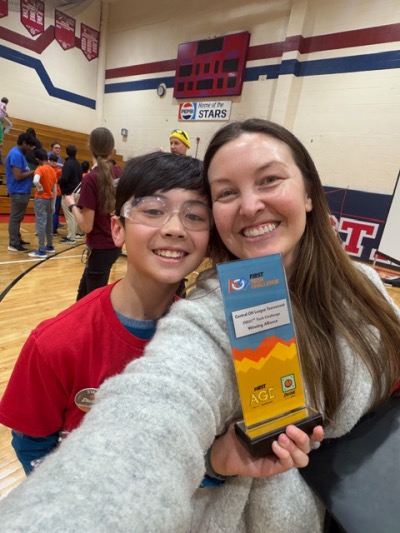
I’m thrilled to now be a cheerleader for my sons’ goals in hockey, baseball, robotics, and spelling bees.
What else would you like my Operation Melt readers to know about you, your work, or the journey you’ve taken?
While it is possible to craft the life you want, it’s up to you to make the choices that will support your vision.
My career journey has not been linear, but it’s always aligned with where I want to be. My goals always begin with a simple curiosity and eagerness to learn more. Starting with a micro-goal of researching more about a topic is a great place to start.
Additionally, there will be opportunity costs. You need to be intentional about what you want to pursue and what you’re ok to leave behind.
Lastly, I would empower readers that we all have to start somewhere. It can sometimes feel overwhelming to ask for help, especially from experts in the field. However, I refuse to be embarrassed to be seen trying, especially as my boys are watching.

What’s one thing you do that might look lazy or indulgent from the outside, but is actually essential to your success?
I consume a considerable amount of content (tv shows, movies, podcasts, social media). This can probably seem indulgent from the outside, but it’s provided great motivation and balance to avoid burn out territory.
I typically engage with content through habit stacking, which allows me to pair something I may not enjoy (i.e., folding laundry) with something I look forward to (i.e., a new podcast). While my average screen time is not an area of pride, habit stacking prevents me from feeling overburdened by my to-do list.

If you could go back and give 18-year-old you one piece of advice, what would it be and why?
Trust the process!
For anyone who has gone on a weight loss or gain journey, it can be frustrating to see the scale fluctuate from day to day. Similarly, you might feel discouraged after failing an exam after months of studying.
Your efforts are not fruitless, and you are progressing.
What might seem like a misstep or failure in the moment will still provide benefit in ways you might not immediately recognize.

Where can people go to learn more about you or connect with your work?
Feel free to connect on LinkedIn. I love making new connections and sharing stories. I love to brainstorm and encourage others, so reach out if you’d like to discuss your journey!
Lindsay is a powerful example of what’s possible when “too busy” stops being the end of the conversation.
She shared a lot of insight in this interview, but there was one phrase she never used. “I’m too busy.”
Rather than overexplaining, I want to highlight a few moments that stood out most.
“While I couldn’t control external factors, I could control how I showed up and what I offered.”
Lindsay modeled a classic E+R=O mindset. She understood that while events are often outside our control, our responses are not. That perspective kept her outcomes within reach even when circumstances were hard. She experienced this firsthand when she was furloughed during the pandemic and chose to use that time to invest in herself instead of waiting for conditions to improve.
“Keep your goal(s) visible!”
Lindsay consistently reminded herself of what she was working toward. By keeping her goals front and center, she trained her brain to stay aligned with her vision and to look for opportunities to support it even when she was not actively thinking about it.
“Trust the process! Your efforts are not fruitless and you are progressing.”
She spoke candidly about how goal progress is rarely linear. The work can feel unglamorous or ineffective right before a breakthrough. Quitting when things feel uncomfortable often means walking away just before momentum shows up.
“I refuse to be embarrassed to be seen trying, especially as my boys are watching.”
This may have been the most powerful reminder of all. Lindsay understands that how she shows up matters. She is intentional about modeling effort, resilience, and growth. As she put it, we all have to start somewhere.
So the real question is simple.
Why not let today be the day you start becoming the person you have been telling yourself you do not have time to be?
Lindsay Is Managing Her Work and Life as Projects
Lindsay had a clear vision for who she wanted to be and why. From there, she set meaningful goals and followed through on them.
But she didn’t leave the outcome to hope or motivation.
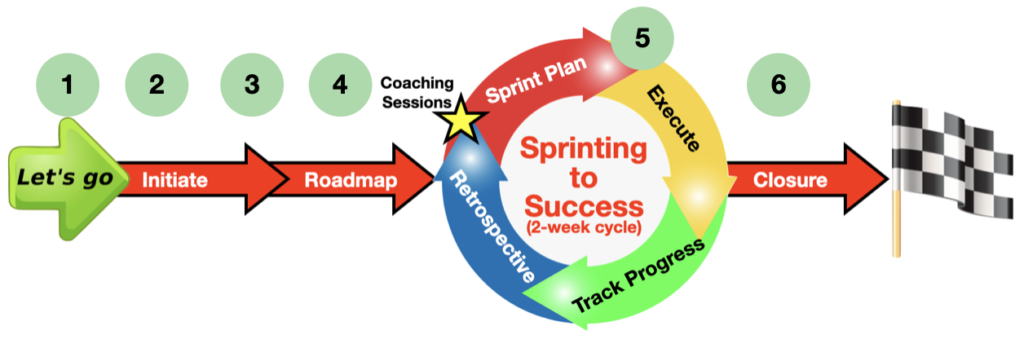
She used practical, proven goal success strategies to move her goals forward. Many of the techniques Lindsay described throughout this interview align directly with the Project Manage Your Life blueprint.
While all six Project Manage Your Life strategies show up in Lindsay’s story, I’m going to highlight just a few that stand out most clearly.
✅ Build a plan that works for you:
While the goal success strategies Lindsay used are universally applicable, the plan itself was uniquely hers.
It started with clarity around priorities. When you know what matters most and why, decisions about where your time and energy go become much easier. Not because you are “too busy,” but because some things simply do not align with your current priorities.
Next, Lindsay equipped herself with information.
She took the time to research her options and understand what her goals would actually require. Just as important, she paid attention to herself. She learned what pace she could sustain and where overload would begin. Her goal was not balance in the abstract, but harmony between her responsibilities and the life she wanted to live.
Finally, Lindsay used what I call “prime time” to do the work.
Prime time is the part of your day when your energy, focus, and commitments are best aligned with the work you want to do. By acknowledging her constraints, Lindsay recognized that her prime time for MBA work was early mornings on both weekdays and weekends and she built her plan around that reality.
Ruthless prioritization, doing your homework, and finding your prime time are powerful antidotes to the “too busy” story.
✅ Expect and plan ahead for problems:
Lindsay is the first to admit that her path was not a smooth, straight line. There were obstacles along the way and moments that required adjustment.
What made the difference is that she planned for problems instead of being surprised by them.
By thinking ahead, she was able to reduce some of the biggest risks before they became derailments. We already touched on a few examples, like doing her research to manage financial uncertainty and using prime time to make the work fit realistically into her life. There was one other proactive strategy she shared that deserves attention.
Lindsay talked about using habit stacking.
Habit stacking is a simple but effective time management technique where you combine activities so they happen together. Ideally, you pair something you need to do with something you enjoy to reduce friction and keep momentum going. Lindsay’s example was listening to new podcasts while folding laundry. The same idea shows up when people add music, audiobooks, or phone calls to exercise time to make it feel easier and more sustainable.
By anticipating what could knock her off track and planning around it, Lindsay avoided unnecessary obstacles and kept moving forward.
✅ Don’t Go It Alone:
Lindsay’s story is also a story of teamwork.
She didn’t try to pursue her goals in isolation. She built and leaned on a support system that included family, mentors, coaches, and friends who helped keep her focused, supported, and accountable.
Even early on, while researching MBA programs, she relied on others by talking with alumni who had already walked the path she was considering. She used their insight to make more informed decisions and avoid unnecessary missteps.
Once she was in the program, Lindsay leaned into study groups to navigate the coursework and to build relationships that extended beyond graduation.
Most importantly, she spoke about the role her husband played as a steady, supportive partner in her pursuits and how that support went both ways. That kind of mutual investment makes progress more sustainable.
There’s a reason the saying goes, “If you want to go fast, go alone. If you want to go far, go together.” Lindsay’s journey is proof that long-term success is rarely a solo act.
I was honored to play a small part in Lindsay’s journey and remain proud of what she has accomplished. Her story is a reminder that having the right support can make ambitious goals more sustainable. If you’re looking for a partner to support your goals, I’m always happy to be part of the team. Click here to schedule a discovery chat.
Do You Want to Stop Being Too Busy?
Did Lindsay’s story make you question how often busyness runs the conversation?
Do you want to take back control of your time?
Are you ready to make space for something that actually matters to you?
I have a time machine for you and I’m sharing it at my next Goal Crusher Coffee Chat.
None of Your Busyness
A time machine for people who feel “too busy”.
In this session, I’ll walk you through simple, practical steps my clients use to reclaim their days without overhauling their lives.
Then we’ll shift into an informal roundtable where we’ll challenge ourselves with one powerful question:
What’s one step you could take to find 30 minutes each day to work on something that matters to you?
If you’re ready to stop letting “I’m too busy” decide what gets postponed, this conversation is for you.
Save your spot below for this free event.

💥 Feeling too busy to add even one more thing, especially something that matters? Lindsay’s story is a reminder that “too busy” is often a belief, not a fixed reality. With the right practices, you don’t have to leave your goals to chance or wait for a perfect time to start. You can make progress intentionally, one decision at a time.
You’re here for a reason. Let’s take the next step.

Meet Coach Tony
Tony Weaver is a master life coach, technologist, consultant, writer, and founder of Operation Melt.
He helps project managers and other left-brained high-achievers pursue their biggest goals.
Through free resources, personalized coaching, and his proven Project Manage Your Life system, Tony empowers clients to move their dreams from “someday” to success… one step at a time.
Learn more about Project Manage Your Life, the system my clients and I use to crush our goals, at OperationMelt.com/PMYL/
 Meet Coach Tony